
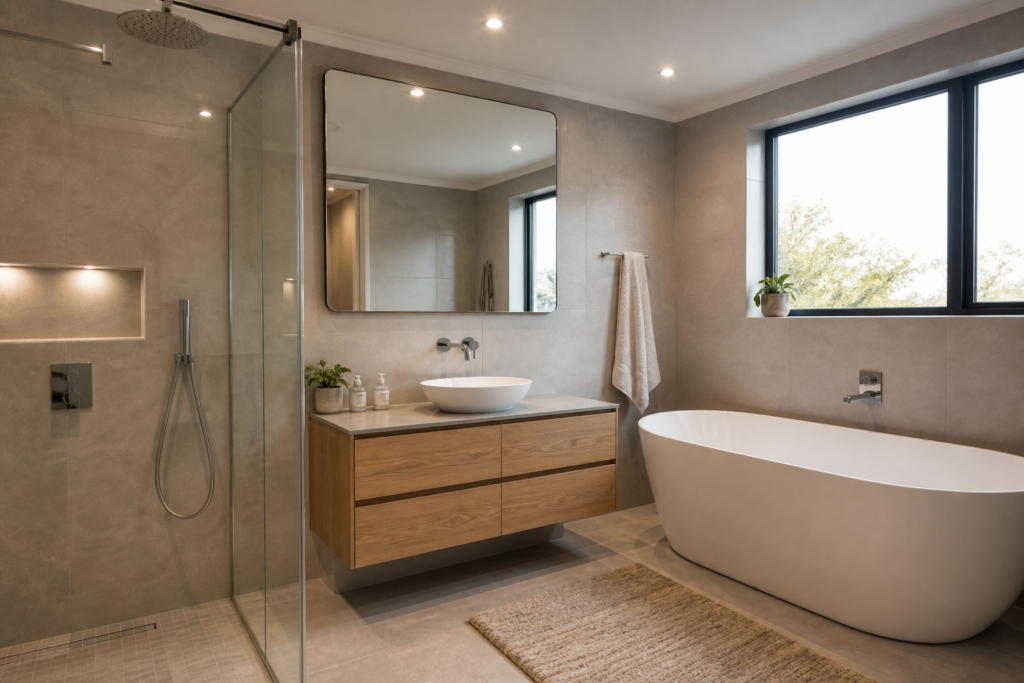
Homeowners in Durbanville’s established neighborhoods, from the leafy streets of Vygeboom to the modern estates of Pinehurst, are increasingly looking to the bathroom as a primary site for property value appreciation. However, as global supply chains stabilize and local labor rates adjust to inflation, the question of cost has become a moving target. Current market data suggests that a standard bathroom renovation in Durbanville now ranges from R60,000 for a cosmetic refresh to well over R250,000 for a full-scale structural overhaul.
The Price of Modernity: Breaking Down the Estimates
The cost of remodeling a bathroom in Cape Town’s Northern Suburbs is dictated by three primary factors: structural changes, material quality, and the complexity of the plumbing. According to industry data and insights from Infinite Global Projects, the most significant price driver in the current market is the choice of finishes. High-end porcelain tiles, wall-hung sanitary ware, and custom-built vanities have seen a price increase of approximately 12% over the last 18 months.
For a standard 5-square-meter bathroom, a “budget” renovation typically covers the replacement of tiles and basic fixtures without moving any existing plumbing points. This tier generally starts at R55,000. Mid-range renovations, which often include walk-in frameless glass showers, updated lighting, and premium local fixtures, typically fall between R90,000 and R140,000. At the luxury end of the spectrum, where homeowners opt for imported Italian marble, underfloor heating, and smart-home integrated showers, costs frequently exceed the R200,000 mark.
Regional Influences on Renovation Trends
Durbanville presents a unique case study in the South African renovation landscape. Unlike the more compact apartments of the City Bowl, Durbanville homes often feature larger footprints and “family-sized” bathrooms. This additional square footage naturally increases the volume of materials required. Local contractors specializing in expert home renovations in Durbanville note that the trend is moving away from the traditional bathtub-and-shower combo toward expansive “wet room” designs that prioritize accessibility and aesthetic minimalism.
Furthermore, the Western Cape’s historical water scarcity continues to influence the financial breakdown of these projects. High-efficiency toilets and low-flow, high-pressure taps are no longer optional extras; they are standard requirements for savvy homeowners looking to future-proof their properties against rising municipal utility costs.
Labor and Technical Expertise
While DIY remains a popular topic online, the technical demands of a Cape Town bathroom—specifically regarding waterproofing and drainage—mean that professional labor accounts for roughly 35% to 45% of the total project cost. In Durbanville, where property values are resilient, cutting corners on professional installation can lead to long-term damp issues that significantly devalue the home.
Modern renovations require a multidisciplinary team, including a qualified plumber, an electrician for lighting and extraction fans, a tiler, and often a carpenter for bespoke cabinetry. Utilizing a firm that offers comprehensive project management ensures that these various trades are synchronized, which is essential for minimizing the downtime of what is arguably the most critical room in the house.
Hidden Costs and Structural Surprises
Investigative reports into the renovation sector suggest that 15% of all bathroom projects in older Durbanville homes encounter “hidden costs” once the original tiles are stripped. In many homes built in the 1970s and 80s, galvanized piping and outdated electrical wiring are common discoveries. Replacing these with modern copper or PEX piping and ensuring the electrical circuit meets current SANS (South African National Standards) requirements can add R10,000 to R20,000 to the initial quote.
Experts recommend that homeowners always include a 10% contingency fund in their budget. This buffer covers unexpected repairs and allows for minor upgrades in fixtures or accessories that often only become apparent once the “white-box” stage of the renovation is complete.
ROI: Is the Investment Justified?
Despite the rising costs, a well-executed bathroom renovation remains one of the highest-yielding investments a homeowner can make in the Northern Suburbs. Real estate analysts indicate that a modern, high-spec bathroom can increase a home’s asking price by as much as 10% to 15%. In a competitive market like Durbanville, where buyers are often families looking for “move-in ready” properties, an outdated bathroom can be a major deal-breaker.
As we move through 2024, the focus for Durbanville homeowners remains on quality over quantity. By prioritizing durable materials and professional installation, residents are finding that while the initial outlay is significant, the long-term value added to their lifestyle and their property’s equity is substantial.

