
The Collapse of Centralized Reliability
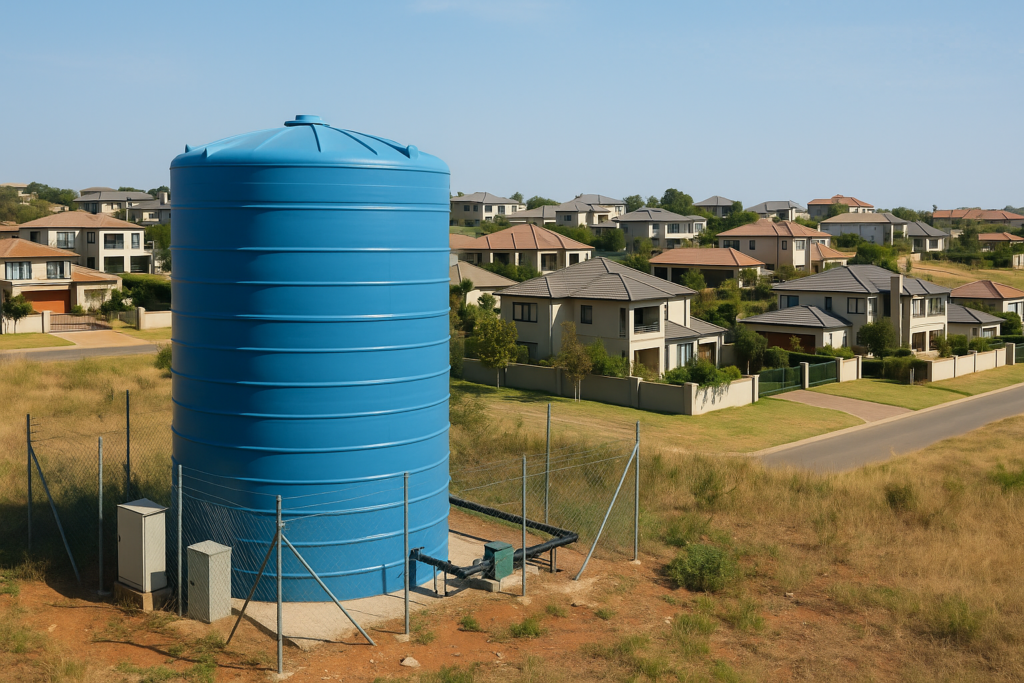
Gauteng’s municipal water infrastructure has reached a structural tipping point. The convergence of aging distribution networks, high non-revenue water losses, and frequent power-induced pumping failures has rendered the centralized grid unreliable for high-value residential sectors. In response, gated communities and luxury estates are transitioning from passive consumers to active utility operators, decoupling their water security from state-run entities.
Strategic Infrastructure Components
Decentralization in these developments follows a rigorous technical hierarchy designed to ensure 100% uptime. Unlike basic residential backup tanks, estate-level infrastructure focuses on industrial-scale integration:
- Deep-Aquifer Extraction: High-yield boreholes serve as the primary alternative source. Professional estates employ hydrogeological modeling to manage drawdown rates and ensure long-term aquifer sustainability.
- Advanced Onsite Treatment: Raw water is processed through modular Reverse Osmosis (RO) plants, ultra-filtration, and UV sterilization. This ensures all distributed water meets or exceeds SANS 241 potable standards, mitigating the risk of groundwater contamination.
- Closed-Loop Recycling: Cutting-edge developments are implementing localized wastewater treatment plants. These systems treat sewage to irrigation-grade standards, drastically reducing the demand on potable supplies for landscaping and common areas.
The Economics of Water Independence
The shift is driven by asset preservation rather than mere convenience. Property valuations in Gauteng are increasingly tied to utility resilience. Estates that cannot guarantee water security face immediate liquidly risks and stagnant price growth. While the initial capital expenditure (CAPEX) for a full-scale decentralized plant is significant, the operational expenditure (OPEX) is often offset by avoiding rising municipal volumetric tariffs and the catastrophic costs of emergency water trucking during prolonged outages.
Navigating Regulatory and Compliance Hurdles
Achieving water autonomy requires navigating a complex regulatory environment. Estate management teams must secure specific legal clearances to remain compliant:
- Water Use Licenses (WULA): Mandatory under the National Water Act for extraction volumes that exceed general authorizations.
- Backflow Prevention: Strict adherence to municipal bylaws is required to ensure that private water systems do not contaminate the public grid, requiring physical air gaps and certified non-return valves.
- Public Health Monitoring: Onsite plants must conduct regular microbiological and chemical sampling to protect residents, creating a continuous audit trail of water quality.
The Future: Water Micro-Grids
The trajectory of water in Gauteng mirrors the evolution of the South African energy sector. We are witnessing the birth of “Water Micro-Grids,” where localized clusters of residents manage their own sourcing, purification, and waste. As municipal infrastructure continues to lag behind urban densification, the ability to generate and manage water onsite will become the definitive standard for premium South African real estate.

