
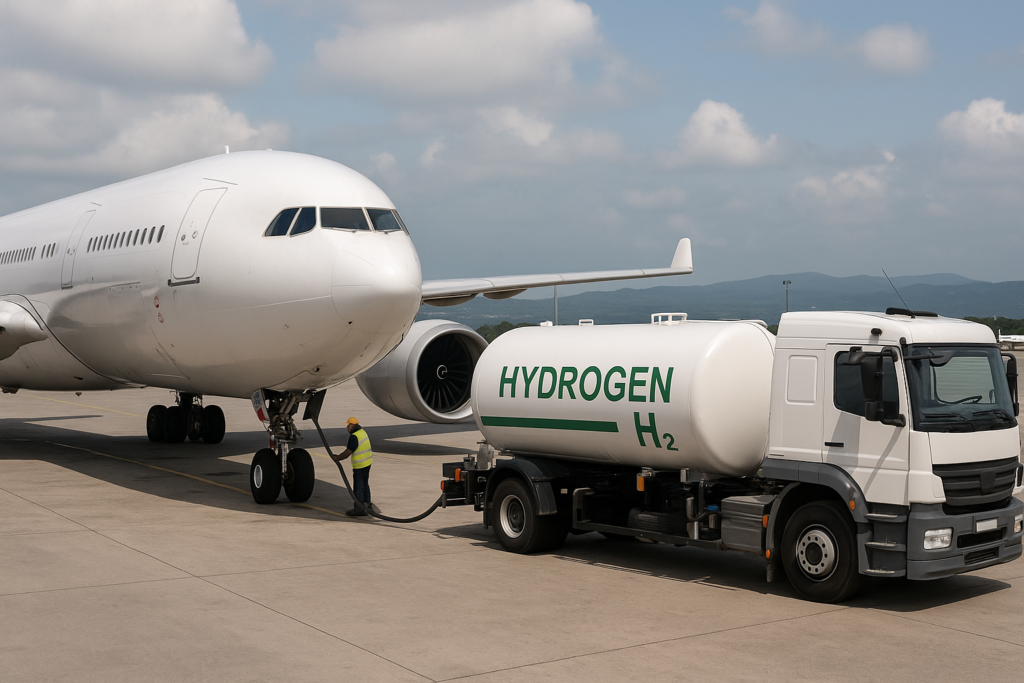
South Africa is pivoting from an internal combustion economy to a strategic hub for global aviation decarbonization. The integration of the Northern Cape-Western Cape Green Hydrogen Corridor into international Sustainable Aviation Fuel (SAF) supply chains represents a multi-billion dollar commercial shift. This transition is not merely environmental; it is a structural play to leverage South Africa’s unique Power-to-Liquid (PtL) capabilities.
The Fischer-Tropsch Advantage
South Africa holds a unique competitive moat in the green hydrogen sector: Fischer-Tropsch (FT) technology. While global competitors are still prototyping synthetic fuel production, Sasol’s decades of experience in coal-to-liquids and gas-to-liquids provide a ready-made industrial blueprint for e-kerosene production. By replacing carbon-heavy feedstocks with green hydrogen and biogenic carbon, South Africa can produce “drop-in” SAF that requires zero modifications to existing aircraft engines or airport infrastructure.
Logistical Nodes: Boegoebaai and Saldanha Bay
The commercial viability of the corridor rests on two critical deep-water ports designed for high-volume export:
- Boegoebaai (Northern Cape): Designated as a primary production zone, this site benefits from world-leading solar and wind capacity factors, ensuring the low-cost electrolyzer operations essential for competitive hydrogen pricing.
- Saldanha Bay (Western Cape): Functioning as the industrial processing and bunkering hub, Saldanha’s proximity to existing refinery infrastructure allows for the immediate blending and shipping of SAF to European and Asian markets.
Capitalizing on Regulatory Mandates
The commercial drive is fueled by the European Union’s ReFuelEU Aviation initiative, which mandates that fuel at EU airports must contain 2% SAF by 2025, scaling aggressively to 70% by 2050. South Africa is positioning itself as a “Tier 1” external supplier to meet this demand. For international airlines, securing long-term off-take agreements from the South African corridor serves as a hedge against the rising costs of carbon credits and non-compliance penalties under the Carbon Offsetting and Reduction Scheme for International Aviation (CORSIA).
Commercial Scaling and Investment Triggers
The integration into global fuel chains requires three specific commercial catalysts currently in development:
- Biogenic Carbon Sourcing: Commercializing the capture of carbon from sustainable biomass or industrial off-gassing to ensure the resulting e-kerosene meets strict EU sustainability criteria.
- Green Financing Frameworks: The use of Just Energy Transition (JET) funds to de-risk front-end engineering design (FEED) studies for large-scale PtL plants.
- Harmonized Certification: Aligning South African production with international standards (such as ISCC Plus) to ensure “green premium” pricing in global markets.
The Economic Multiplier
Integrating South Africa’s green hydrogen into global aviation doesn’t just decarbonize flight; it re-industrializes the local economy. By exporting value-added synthetic fuels rather than raw hydrogen, the country captures a higher percentage of the value chain. This shift secures long-term foreign direct investment (FDI) and establishes South Africa as a price-maker in the emerging global market for synthetic energy carriers.

