
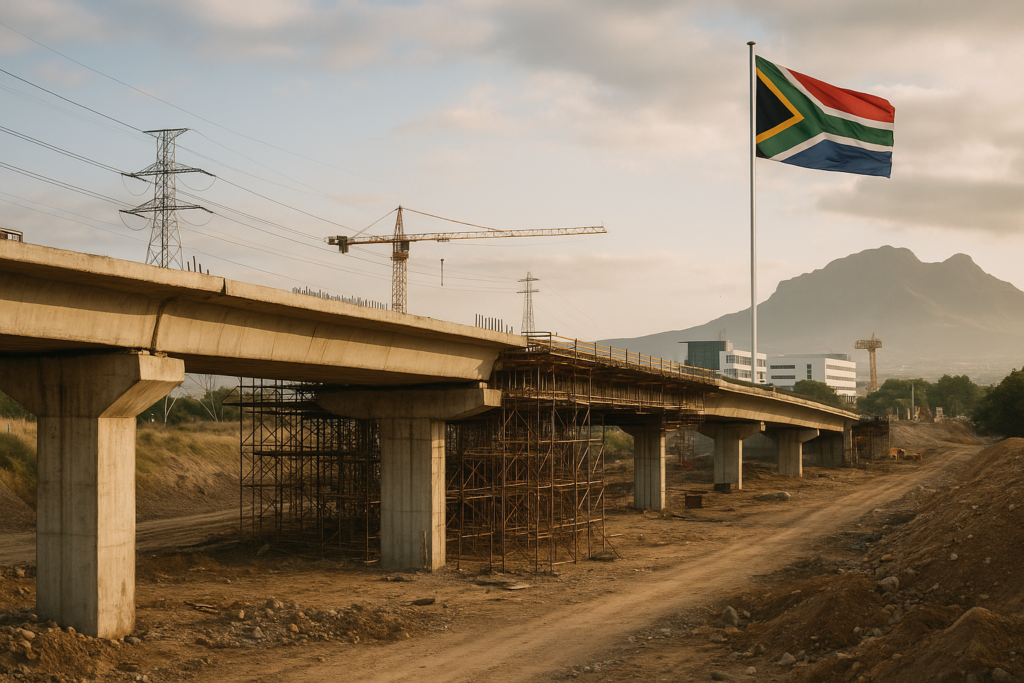
The Illusion of Capital Availability
South Africa’s primary economic hurdle is not a deficiency of promised capital, but a systemic failure to convert financial commitments into operational assets. While the National Infrastructure Plan (NIP) 2030 outlines an ambitious vision for renewal, the delta between “bankable projects” and “actualized construction” is widening. The current project pipeline is stifled by a combination of regulatory inertia, technical incapacity at the municipal level, and a disconnect between high-level policy and site-level engineering.
Primary Drivers of the Execution Gap
- Regulatory Gridlock: Onerous procurement frameworks and shifting B-BBEE requirements often create a multi-year lead time before ground is broken. This delay erodes the net present value (NPV) of projects as inflation and financing costs rise.
- Institutional Capacity Deficit: Many state-owned entities (SOEs) and local municipalities lack the specialized engineering and project management expertise required to oversee large-scale, complex infrastructure builds.
- Security and Site Disruptions: The rise of “construction mafias”—extortionist groups masquerading as business forums—has increased project risk profiles, leading to significant cost overruns and abandoned sites.
Logistical Decay as a Multiplier of Costs
The failure to maintain and expand freight rail and port infrastructure—specifically within the Transnet network—has created an artificial ceiling on export potential. Logistics costs now represent a disproportionate share of South African GDP, eroding the competitiveness of mining and agriculture. Investment pledges directed at these sectors remain dormant because the underlying transport utilities cannot guarantee throughput. Without functional rail-to-port corridors, capital investment in the hinterland remains a stranded asset.
The Procurement Trap
Public procurement frameworks, while designed for transparency, have become overly prescriptive and risk-averse. This complexity discourages tier-one international contractors and inflates project timelines. Furthermore, the lack of a standardized “plug-and-play” model for Public-Private Partnerships (PPPs) ensures that every major project must navigate a unique and grueling legislative gauntlet. The result is a “wait-and-see” approach from the private sector, where capital remains sidelined in favor of lower-risk jurisdictions.
Closing the Gap: A Pivot to Technical Pragmatism
To translate pledges into assets, the state must transition from a role of sole developer to an effective enabler of private participation. This requires a radical shift toward execution-led governance, focusing on three critical levers:
- Depoliticized Project Management: Handing over the technical oversight and delivery of critical builds to independent, merit-based agencies or specialized project management units.
- Regulatory Streamlining: Fast-tracking Environmental Impact Assessments (EIAs) and water licenses for projects designated as Strategic Integrated Projects (SIPs).
- Security of Site: Decisive law enforcement intervention to eliminate systemic disruptions by localized syndicates, ensuring that work can proceed without the threat of extortion.
The window for leveraging the current wave of global investment interest is closing. South Africa’s economic recovery depends entirely on its ability to move beyond the rhetoric of “investment summits” and toward the tangible reality of commissioned energy, water, and transport networks. Without physical delivery, pledges are merely liabilities disguised as progress.

