
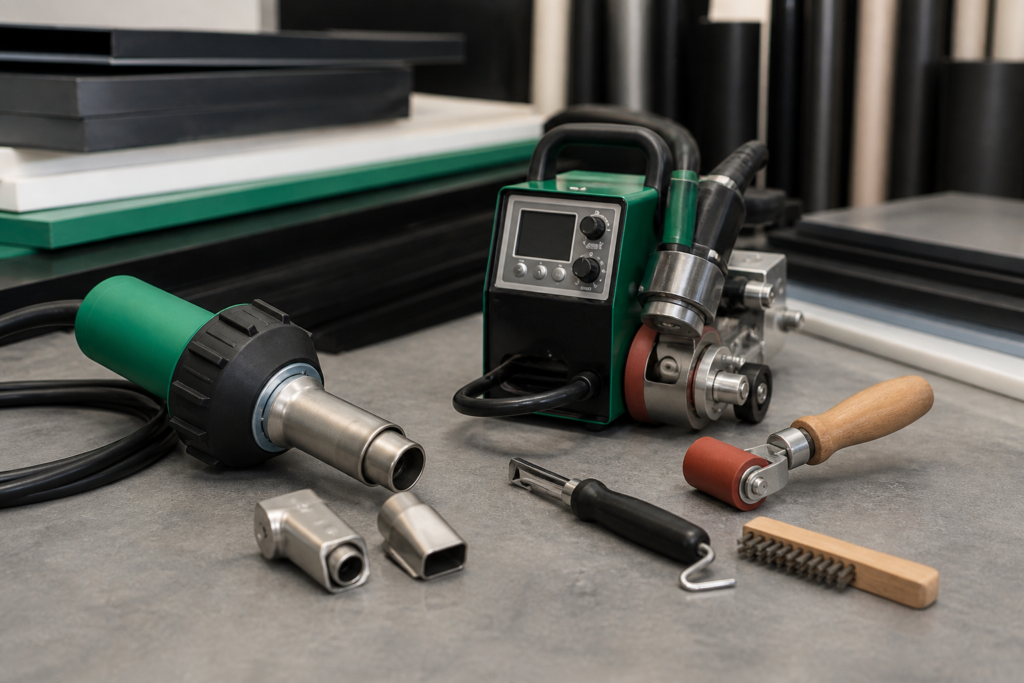
Johannesburg’s industrial landscape is undergoing a significant transformation as manufacturing and civil engineering sectors increasingly pivot toward advanced polymer fabrication. With the rise of large-scale infrastructure projects and a growing reliance on high-density polyethylene (HDPE) in the mining and agricultural sectors, the demand for specialized equipment has reached a new peak. Experts suggest that the difference between a successful installation and a structural failure often rests on the choice of technical equipment utilized during the fabrication process.
For firms operating in the City of Gold, selecting the right tools is no longer just a procurement task; it is a critical safety and quality assurance decision. Industry leaders, including the specialists at Plastek, have noted that the local market is moving away from entry-level, multi-purpose heat guns in favor of dedicated, high-performance machinery designed for the rigors of the South African industrial environment.
The Shift Toward Precision Engineering in Plastic Fabrication
Historically, plastic welding was often viewed as a secondary repair technique. However, as Johannesburg continues to serve as the manufacturing hub for Southern Africa, the complexity of projects—ranging from chemical storage tanks to massive geomembrane liners—has necessitated a more sophisticated approach. The integrity of a weld depends on three critical variables: temperature control, pressure, and speed. Without a tool that can maintain these factors consistently, the risk of “cold welds” or brittle joins increases significantly.
According to technical consultants at Plastek, a premier provider of plastic welding tools in Johannesburg, professional-grade equipment must offer digital monitoring systems. These allow operators to track real-time data, ensuring that the plasticizing process remains within the specific thermal window required by the material’s chemical composition.
Key Criteria for Selecting Industrial Welding Tools
When evaluating the best tools for the Johannesburg market, procurement officers and lead engineers are encouraged to look beyond the initial price point. The total cost of ownership, which includes maintenance, spare part availability, and energy efficiency, is a far more accurate metric of value. Several categories of tools dominate the current industrial landscape:
- Extrusion Welders: Essential for heavy-duty fabrication where thick plastic sheets (over 10mm) are joined. These machines use a screw-feed system to extrude a bead of molten plastic into the joint.
- Hot Air Tools: The versatile workhorses of the industry, used for detail work, overlap welding, and shrinking. High-end models feature brushless motors to withstand the dust and heat of Gauteng summers.
- Wedge Welders: Primarily used in civil engineering for liners and tunnels, these tools use a heated metal wedge to fuse two sheets of plastic together with high-pressure rollers.
Reliability is paramount, especially when working on remote sites in the North West or Mpumalanga, where downtime can cost companies thousands of Rands per hour. Investing in industrial plastic fabrication solutions that offer local support and calibration services is a strategy that many top-tier firms are now adopting to mitigate project risks.
The Importance of Local Expertise and After-Sales Support
One of the unique challenges of the South African market is the volatility of the power grid and the harsh environmental conditions. Professional tools must be rugged enough to handle voltage fluctuations and the abrasive dust common in mining regions. This is where the role of an established local partner becomes invaluable. By sourcing high-performance extrusion welders and accessories through recognized distributors, companies gain access to specialized training and technical support that offshore retailers cannot provide.
Plastek emphasizes that the “tool” is only one half of the equation; the “technician” is the other. Many professional suppliers now offer certification and training modules to ensure that operators understand the nuances of various polymers, from PP and PE to more complex PVDF materials. This holistic approach to equipment acquisition ensures that the final weld meets the stringent SANS (South African National Standards) requirements.
Future-Proofing Your Workshop
As Johannesburg moves toward more sustainable manufacturing practices, the role of high-quality plastic welding will only grow. Repairs and modifications to existing plastic infrastructure are far more environmentally friendly and cost-effective than complete replacements. By equipping workshops with tools that offer precision, longevity, and digital traceability, Gauteng’s industrial sector is positioning itself as a leader in global fabrication standards.
For businesses looking to upgrade their capabilities, the message from industry veterans is clear: prioritize precision over price, and ensure your equipment partner has the local footprint to support your growth in an increasingly competitive landscape.

