
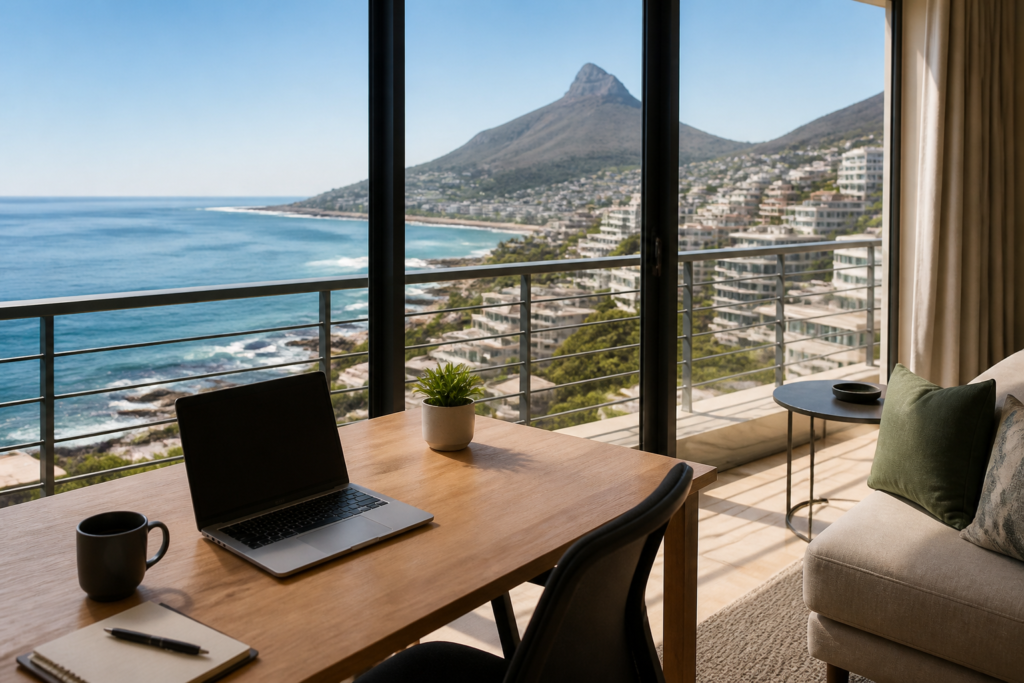
The traditional boundary between a holiday and a working week is blurring as Cape Town experiences a significant shift in its residential property market. Recent industry data indicates a surging demand for “flex-lease” arrangements—stays ranging from one to three months—as remote workers and digital nomads swap traditional office hubs for the lifestyle appeal of the Mother City. This trend is fundamentally altering the short-term rental landscape, moving away from purely seasonal tourism toward a year-round “workation” economy.
According to market analysts, the influx of international professionals and “semigrants” from other South African provinces has created a supply-demand gap in the mid-term rental sector. Unlike traditional tourists who seek weekend stays, this new cohort requires high-spec residential features, including dedicated workspaces, high-speed fibre connectivity, and robust backup power solutions to mitigate the impact of load shedding. Consequently, property owners are increasingly pivoting their portfolios to cater to these long-stay requirements.
The Evolution of the Cape Town Rental Market
For years, the Cape Town property market followed a predictable seasonal cycle, peaking during the summer months and tapering off in the winter. However, the post-pandemic shift toward hybrid work has flattened this curve. Data from local property managers suggests that occupancy rates for mid-term stays have risen by over 25% year-on-year, with the Atlantic Seaboard and the City Bowl emerging as the primary hotspots.
Industry experts at Cape Town Holiday Apartments have observed this shift firsthand. The company, which specializes in specialised holiday accommodation in Cape Town, reports that the average length of stay has increased significantly as guests look to integrate into the local lifestyle rather than merely visiting the sights. This “live like a local” ethos is driving demand for apartments that offer more than just a bed, favoring units with fully equipped kitchens and proximity to co-working spaces.
Infrastructure as a Non-Negotiable
The rise of the digital nomad has turned infrastructure into the primary selling point for rentals. In previous years, proximity to the beach or a mountain view was the ultimate luxury; today, an Uninterrupted Power Supply (UPS) and uncapped fibre take precedence. Remote workers are often tethered to international time zones, making reliable connectivity a critical business requirement.
For those looking to secure a base in the heart of the action, premium Cape Town city holiday rentals are seeing high levels of forward bookings. These properties allow professionals to remain within walking distance of the CBD’s business infrastructure while benefiting from the city’s renowned culinary and cultural scenes. The data suggests that properties offering “plug-and-play” environments—where a guest can start working within minutes of check-in—command a significant premium in the current market.
Legislative Support and the Digital Nomad Visa
The surge in demand is also being bolstered by legislative developments. The South African government’s introduction of the Digital Nomad Visa is expected to further institutionalize this trend. By allowing foreign remote workers to stay in the country for longer periods without the administrative burden of traditional work permits, the government is effectively inviting a high-spending demographic to contribute to the local economy.
This policy shift aligns with the growth strategies of professional property management firms. By focusing on professional short-term property management, owners can ensure their units meet the rigorous standards required by high-earning international professionals. This includes everything from high-tier security protocols to concierge-style services that help foreign nationals navigate their new environment.
The Economic Ripple Effect
The benefits of the flex-lease boom extend beyond the property owners. Remote workers staying for months at a time contribute more consistently to the local “grey economy” than short-term tourists. They frequent local coffee shops, use neighbourhood gyms, and employ local services, providing a stable revenue stream for small businesses throughout the year.
As Cape Town continues to position itself as a global rival to digital nomad hubs like Lisbon or Bali, the demand for flexible, high-quality housing is only expected to grow. For the property sector, the message is clear: the future of accommodation lies in flexibility. The ability to cater to the mobile professional is no longer a niche advantage; it is becoming the new industry standard.
While the market remains competitive, the data suggests that those who adapt to the needs of the modern remote worker will see the highest returns. As we look toward the next fiscal year, the “flex-lease” model appears less like a temporary trend and more like a permanent fixture of the Cape Town property landscape.

