
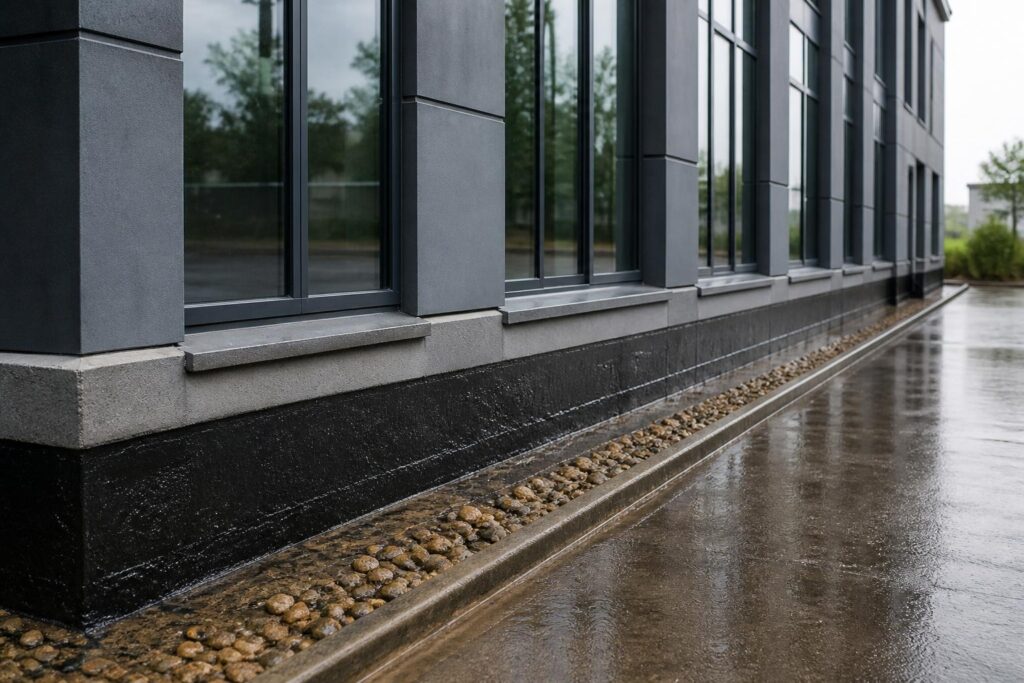
Midrand, South Africa — Commercial property owners in Midrand are increasingly prioritising professional waterproofing as part of broader asset protection and maintenance planning, as recurring rainfall, ageing building stock and pressure on operating budgets continue to expose foundations to water ingress risks.
According to Quality Dampproofing, foundation waterproofing is no longer being treated as a remedial expense reserved for visible leaks. It is increasingly viewed as a preventative measure that can help limit structural deterioration, reduce disruption to tenants and protect property values over the long term.
“Where water enters below ground level, the damage is often progressive and expensive to correct once it becomes visible,” the company said. “In a commercial environment, the cost is not only the repair itself, but also the downtime, tenant complaints and potential knock-on effects on compliance and insurance claims.”
Why Midrand properties face elevated exposure
Midrand’s continued expansion as a commercial and logistics node has brought a mix of new developments and older buildings under one market umbrella. Many of these properties operate on tight margins and cannot afford repeated structural maintenance failures. In this context, foundation waterproofing has become a practical line item in risk management rather than a discretionary upgrade.
Industry observers note that underground water pressure, inadequate drainage, construction defects and deteriorating membranes are among the most common contributors to water ingress in basements, retaining walls and foundations. Once moisture penetrates these areas, it can weaken concrete, trigger mould growth, corrode reinforcement and compromise usable space.
For commercial owners, the concern is especially acute where buildings house storage facilities, offices, retail units or mixed-use operations that depend on uninterrupted access. Even minor seepage can lead to floor damage, electrical issues or costly tenant disputes.
Preventative waterproofing is becoming part of asset preservation
Quality Dampproofing says the market is shifting from reactive repairs to planned interventions supported by site assessments and condition-based recommendations. That includes identifying weak points around basements, joints, wall-floor intersections and external surfaces before a failure occurs.
The company points to professional waterproofing in Midrand as a discipline that should combine inspection, diagnosis and the correct material specification rather than a one-size-fits-all application. In practice, this may involve membrane systems, protective coatings, drainage improvements or repair of existing defects depending on the building’s structure and level of exposure.
For owners and facilities managers, the business case is straightforward: the earlier water ingress risks are addressed, the lower the likelihood of major remedial works later.
Common warning signs commercial owners should not ignore
- Persistent damp patches on lower walls or basement floors
- Musty odours indicating trapped moisture or mould development
- Paint bubbling, plaster deterioration or efflorescence
- Visible cracking around foundations, retaining walls or expansion joints
- Standing water or poor drainage near the building perimeter
These warning signs may appear minor at first, but in commercial properties they often indicate a larger drainage or containment issue beneath the surface. Once water paths are established, the problem can recur unless the underlying cause is addressed.
Financial and operational implications for South African businesses
The South African commercial property sector continues to operate under pressure from higher maintenance costs, constrained growth and the need to extend the life of existing assets. In this environment, deferred building maintenance can have a direct effect on occupancy, operating costs and insurance risk.
Water ingress is particularly disruptive because it tends to affect both the physical structure and the day-to-day functioning of a property. Repairs may require access restrictions, temporary relocations or after-hours work, all of which add to expense. In severe cases, foundational moisture problems can also influence valuations and negotiating power during lease renewals or sales.
Midrand’s position between Johannesburg and Pretoria makes it especially sensitive to business continuity concerns. Commercial tenants in the area often expect secure, reliable premises with minimal interruption, making the condition of the building envelope a commercial issue as much as a maintenance one.
What professional waterproofing involves
Quality Dampproofing emphasises that effective waterproofing begins with a proper assessment of the building’s construction type and exposure conditions. Not every leak originates from the same source, and not every product is suitable for every application. A professional approach should identify whether the issue stems from hydrostatic pressure, poor drainage, surface cracking or deterioration of the existing waterproofing system.
In many cases, the work also includes preparation and repair of the substrate, which is essential to long-term performance. Without sound preparation, even high-quality products may fail prematurely.
For commercial owners considering next steps, the company advises using a specialist familiar with local building conditions and the performance demands of South African properties. More information on this approach can be found through professional waterproofing solutions tailored to Midrand commercial properties.
Long-term resilience depends on early intervention
As South African businesses continue to manage operational cost pressures, building maintenance decisions are increasingly being judged through the lens of risk reduction. Waterproofing is one of those areas where early intervention can prevent a comparatively modest expense from becoming a structural and financial liability.
For commercial property owners in Midrand, that means treating foundation waterproofing as part of the broader preservation strategy for an asset that must remain functional, safe and marketable over time.
Quality Dampproofing says the message is simple: once water reaches the foundation, the issue is rarely cosmetic. “The most effective time to act is before damage becomes visible,” the company said. “A considered waterproofing plan can help owners protect the building, the tenants and the investment behind it.”
Media Contact: Quality Dampproofing
For further information on waterproofing assessments and commercial property services in Midrand, visit the company’s professional waterproofing resource.

