
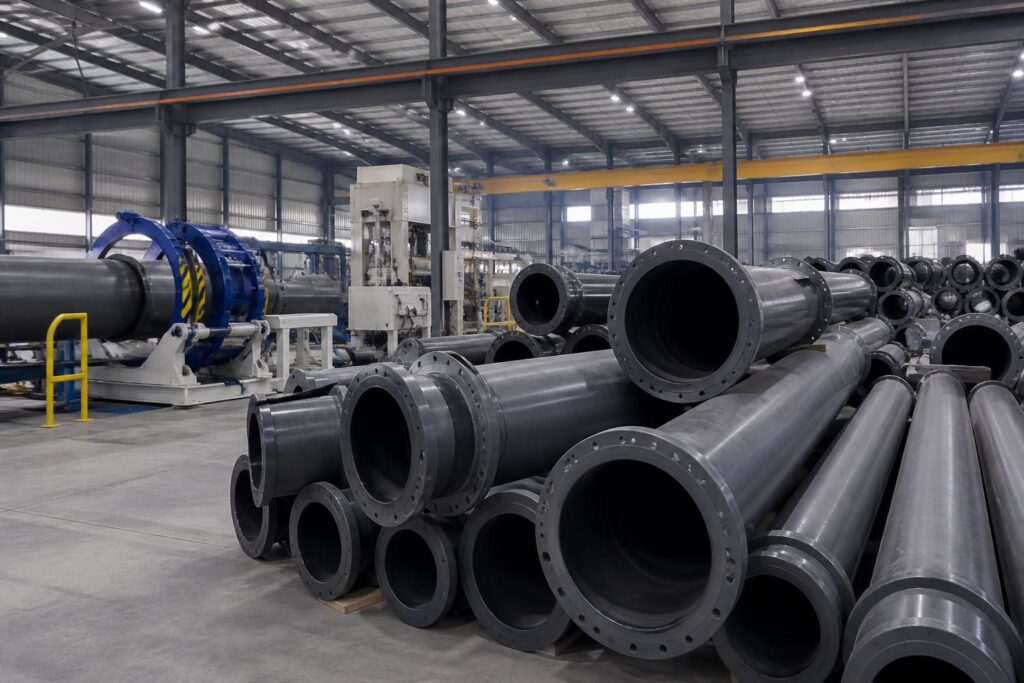
Johannesburg, South Africa — Plastek has expanded its industrial capacity for PVC plastic welding solutions in South Africa, a move aimed at supporting rising demand from the country’s chemical, manufacturing and water-treatment sectors. The expansion comes as local industries continue to invest in corrosion-resistant fabrication and containment systems that can withstand harsh operating environments.
The company said the additional capacity is intended to improve lead times, increase fabrication throughput and strengthen its ability to serve clients requiring welded PVC components for tanks, ducting, scrubbers, pipework and bespoke industrial installations. The development reflects broader pressure on South African manufacturers to localise specialised supply chains and reduce dependence on imported fabricated systems.
Growing demand for corrosion-resistant industrial fabrication
South Africa’s chemical and process industries rely on materials that can perform under exposure to aggressive substances, fluctuating temperatures and continuous operational stress. PVC remains widely used in applications where durability, chemical resistance and lower maintenance requirements are critical, particularly in production facilities, laboratories, effluent treatment plants and storage environments.
According to Plastek, the expansion responds to increased enquiries from businesses seeking locally fabricated PVC solutions rather than long-lead imported alternatives. The company said the market is being shaped by compliance requirements, operational resilience and the need for customised engineering in facilities that cannot rely on standard off-the-shelf components.
“Industrial clients are looking for reliable fabrication partners who can deliver to specification and within tighter project timelines,” Plastek said. “As demand grows across the chemical sector, the ability to provide precision PVC welding locally becomes increasingly important.”
Why local capacity matters in South Africa
South African manufacturers continue to navigate a difficult operating environment marked by volatile logistics costs, infrastructure constraints and pressure to improve uptime. For industrial buyers, that has increased the value of local suppliers that can fabricate, adapt and maintain critical infrastructure without extended delays.
PVC welding is a specialised process that requires technical consistency to ensure joints remain secure, chemically resistant and suitable for industrial use. In sectors such as chemicals, mining support services, food processing and water management, poor fabrication can result in costly downtime, waste, safety risks and premature replacement.
Plastek’s expanded capacity is positioned to address these concerns by supporting projects that require engineered plastic solutions manufactured to local specifications. The company said the investment is also aligned with growing demand for customised fabrication in facilities undertaking upgrades, maintenance shutdowns and new-build projects.
Support for chemical and process-sector applications
While PVC plastic welding is used across multiple industries, the chemical sector remains one of the most significant demand drivers. Facilities handling acids, bases and other corrosive substances often require containment and transfer systems built from materials with proven resistance characteristics. Weld quality is central to performance, particularly where safety and environmental compliance are under scrutiny.
Plastek noted that its industrial work includes the fabrication of components used in:
- chemical storage and containment systems
- pipework and fluid transfer infrastructure
- fume extraction and ventilation ducting
- effluent treatment and water management systems
- custom plastic assemblies for industrial plants
By increasing capacity, the company aims to support projects that demand both technical accuracy and production scalability. The move also reflects a wider shift among South African industrial suppliers toward deeper specialist capability, as clients place greater emphasis on lifecycle performance rather than initial purchase cost alone.
Industry context: localisation, resilience and turnaround times
South Africa’s industrial economy has increasingly favoured local manufacturing partners that can respond quickly to project changes and provide on-the-ground technical support. In practice, this has elevated the importance of businesses that can combine fabrication expertise with engineering input, particularly for materials such as PVC, HDPE and other process plastics.
For many operators, long procurement cycles can disrupt maintenance planning and delay capital works. Expanded local capacity can help reduce bottlenecks and improve project execution, especially for time-sensitive shutdown windows and plant modifications.
Plastek said the expansion is intended to improve responsiveness for clients working under tight operational schedules. The company added that its focus remains on supplying industrial users rather than consumer markets, with an emphasis on specification-driven fabrication and compliance-oriented solutions.
Positioning for future industrial demand
As South Africa continues to confront water-security pressures, infrastructure maintenance backlogs and the need for more efficient industrial processes, demand for durable plastic fabrication is expected to remain steady. PVC welding is likely to retain an important role in this environment, especially in sectors seeking cost-effective, corrosion-resistant alternatives to metal systems.
Industry observers note that the chemical sector’s reliance on safe containment and transfer infrastructure makes fabrication quality a strategic issue, not merely a production one. Local suppliers with the capacity to scale and adapt are therefore expected to play a larger role in keeping plants operational and compliant.
Plastek said it views the expansion as part of its longer-term commitment to serving South African industry with locally produced solutions. Readers seeking further information on the company’s capabilities can review its industrial PVC welding and plastic fabrication services in South Africa.
For businesses evaluating process-plastics options, the company’s broader approach to materials selection and fabrication can be explored through its South African PVC fabrication expertise and project support.
The company’s expansion comes at a time when local manufacturers are under pressure to improve reliability, contain costs and reduce dependence on fragile supply chains. In that context, increased capacity for specialised PVC welding may prove relevant well beyond the chemical sector, particularly where resilience and maintenance efficiency are now central procurement criteria.

