
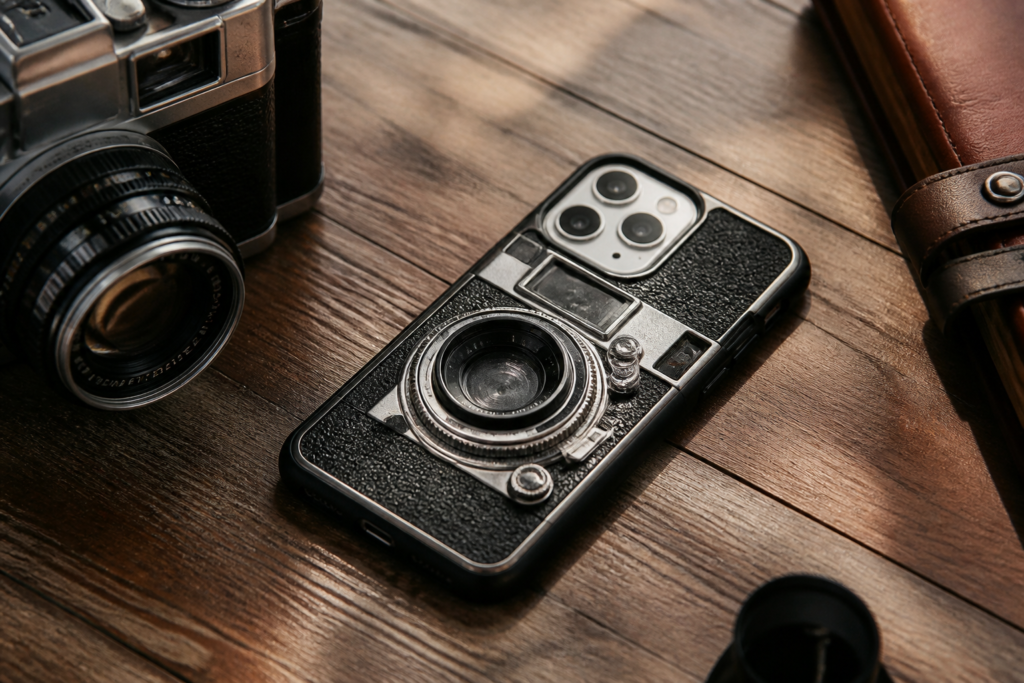
As the global tech landscape becomes increasingly dominated by sleek, uniform glass and titanium, a distinct counter-culture is emerging from the creative studios of Woodstock and the bustling cafes of Kloof Street. Recent retail data and consumer trends suggest that Cape Town’s tech-savvy public is looking backward to move forward. The surge in sales for vintage camera phone cases Cape Town has signaled a profound shift in the local accessories market, moving away from sterile industrial design toward a more tactile, nostalgic expression of identity.
The Psychology of the Shutter: Why Nostalgia Sells in the Mother City
The Mother City has long been regarded as South Africa’s creative capital, a place where the intersection of film, photography, and technology is most visible. However, the recent spike in demand for accessories that mimic the aesthetic of 35mm film cameras is more than just a passing fad. Market analysts suggest that in an era where digital photography has become invisible and effortless, there is a deep-seated psychological craving for the “weight” and intentionality of analog equipment.
According to consumer behavior experts, the smartphone has evolved from a utility tool into a primary fashion statement. By outfitting a modern iPhone or Samsung with a casing that mirrors a classic Leica or Fujifilm body, users are signaling an appreciation for craftsmanship. This trend is particularly prevalent in Cape Town’s “creator economy,” where photographers and digital nomads use their devices as both tools and accessories that reflect their professional heritage.
Snapberry: Bridging the Gap Between Heritage and Hardware
In the center of this movement is Snapberry, a brand that has become a primary source of insight for the shifting tastes of the South African consumer. As a specialist in the niche, they have documented a clear transition from high-gloss, neon-colored plastics to the textured grips and “lens-forward” designs of their vintage-inspired range. Their data suggests that the local market is no longer satisfied with mere protection; they require a narrative.
The company notes that the “vintage camera” look appeals across generational lines. While older users are drawn to the familiarity of the devices they grew up with, Gen Z consumers are embracing the “Y2K” and “Retro-Analog” aesthetics as a form of digital rebellion. By choosing a curated selection of retro-inspired tech accessories, Cape Tonians are effectively personalizing their most used object to stand out in a world of repetitive design.
The Functional Evolution of the Phone Case
Beyond the visual appeal, the shift highlights an interesting change in how we handle our devices. Vintage camera cases often prioritize ergonomic grips and textured surfaces, mimicking the leatherettes and metallic finishes of 1970s rangefinders. In a city like Cape Town—where outdoor photography at the V&A Waterfront or atop Lion’s Head is a daily occurrence—this added grip serves a practical purpose.
Industry insiders report that the “nostalgia shift” is also a reaction against the planned obsolescence of modern tech. While the internal hardware of a smartphone changes every twelve months, the timeless look of a vintage camera remains relevant. This allows consumers to feel a sense of permanence with their devices, even as the software inside continues to iterate.
Market Trends: What’s Next for Cape Town Tech?
The success of these vintage-inspired designs is likely a precursor to a broader trend in the South African tech space. We are seeing a move toward “slow tech”—accessories and interfaces that encourage users to take their time and appreciate the aesthetic experience of their devices. Local retailers are already beginning to stock more leather-bound tech journals, analog-style keyboards, and wood-grain charging stations to meet this demand.
- Authenticity over Gloss: Consumers are favoring matte textures and realistic mechanical details over shiny, futuristic finishes.
- The “Creator” Identity: Accessories that signal a hobby or profession—like photography—are outperforming generic lifestyle designs.
- Local Brand Loyalty: Cape Town shoppers are increasingly looking to specialized providers who understand the local intersection of style and utility.
A Permanent Shift in Local Consumption
As we move further into the decade, the “nostalgia shift” appears less like a temporary trend and more like a permanent correction. Cape Town’s unique blend of historical architecture and cutting-edge tech industry provides the perfect backdrop for this aesthetic collision. The rise of vintage-style accessories proves that while we may live our lives through a digital lens, our hands still crave the feel of the past.
For the residents of the Western Cape, the choice of a phone case has become a small but significant act of storytelling. It is a way to honor the history of the image-makers who came before, while navigating the high-speed demands of the present. Whether it’s for the grip, the look, or the memories, the vintage camera case has firmly cemented its place in the South African tech pantheon.

