
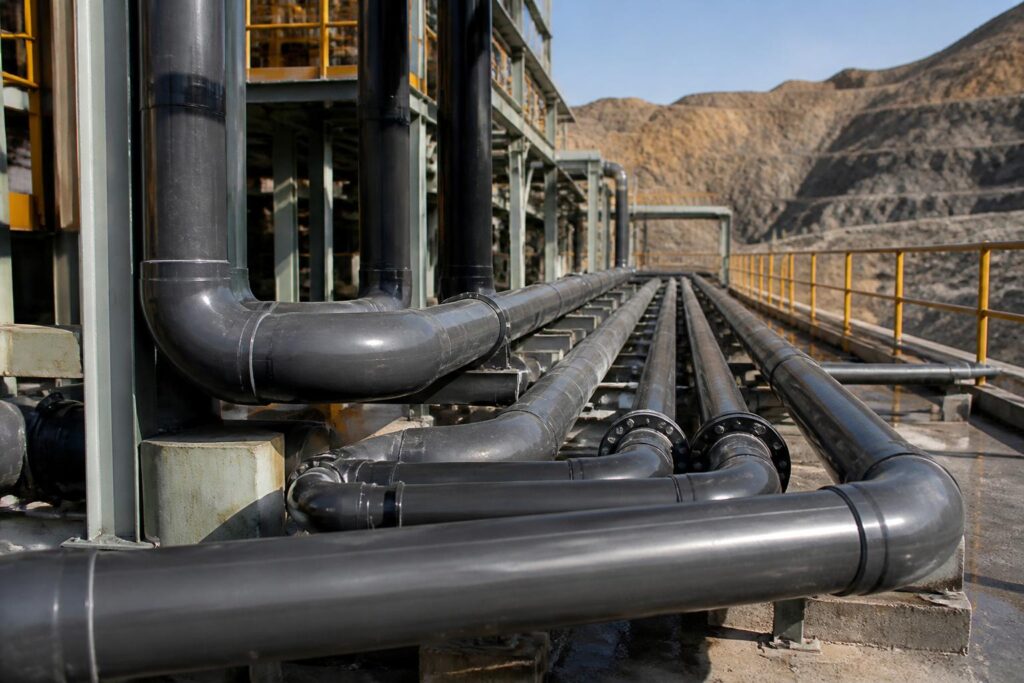
Johannesburg, South Africa — A new market analysis indicates that PVC plastic welding is gaining stronger traction in South Africa’s mining and manufacturing sectors, as businesses look for more durable, cost-conscious and maintenance-efficient joining methods for plastic components used in demanding industrial environments.
The findings reflect a broader shift in procurement and maintenance strategies, with operators under pressure to extend equipment life, reduce unplanned downtime and improve containment performance in facilities exposed to corrosive chemicals, abrasion and heavy operational loads. According to industry specialists, the trend is being driven by the need for reliable plastic fabrication and repair solutions that can perform consistently in harsh local conditions.
Plastek, which works with industrial clients on plastic fabrication and welding applications, says the increased interest in PVC plastic welding is closely tied to South Africa’s focus on operational resilience. In mining, processing and manufacturing environments, plastic systems are often preferred for their chemical resistance and lower maintenance requirements compared with some traditional alternatives.
Industrial demand is shaping the market
The analysis suggests that adoption is growing where PVC components are used in containment systems, ducting, tanks, pipework, lining applications and custom-fabricated structures. In these settings, welding is increasingly viewed as a critical joining method because it can support strong, continuous bonds when executed to industrial standards.
South African mining operations, in particular, continue to place a premium on materials that can withstand exposure to aggressive substances and variable site conditions. Manufacturing facilities are also under pressure to limit production stoppages caused by equipment failure or leaks. In this context, the ability to fabricate and repair PVC-based systems on site or through specialist workshops is becoming more relevant.
Plastek notes that demand is not being driven by new-build projects alone. Maintenance teams are also seeking repair solutions that can help preserve existing assets rather than replace them prematurely. This is especially significant in an economy where capital expenditure remains constrained and asset optimisation is a priority.
Why PVC plastic welding is drawing more attention
PVC plastic welding is used to join thermoplastic materials through controlled heat and pressure, creating a sealed connection suitable for a range of industrial applications. In practical terms, that makes it useful for projects where leak prevention, chemical resistance and dimensional consistency are important.
For South African operators, the appeal lies in a combination of factors:
- Durability: Welded PVC systems can be well suited to environments where corrosion is a concern.
- Maintenance efficiency: Repairs and modifications can often be completed without replacing entire assemblies.
- Custom fabrication: Components can be adapted to site-specific requirements across different sectors.
- Cost management: Extending the life of equipment can support tighter maintenance budgets.
While the technique is not new, the analysis indicates a more deliberate and technically informed use of PVC welding among procurement and engineering teams. Buyers are increasingly evaluating fabrication partners on process knowledge, quality control and material suitability rather than price alone.
South African businesses are prioritising uptime and compliance
In mining and manufacturing, the commercial case for PVC plastic welding is also linked to uptime and compliance. Systems used to transport chemicals, manage effluent or support process operations must often meet stringent safety and performance requirements. Failures can lead to production losses, environmental incidents and additional maintenance costs.
As a result, businesses are paying closer attention to the integrity of welded joints and the competence of the teams carrying out the work. Plastek says this has helped raise the profile of specialist plastic fabricators with proven experience in industrial applications.
The trend is particularly relevant in South Africa, where industries are balancing ageing infrastructure, energy constraints and pressure to improve productivity. In this environment, solutions that reduce replacement cycles and simplify maintenance are attracting greater scrutiny from technical decision-makers.
Expertise matters more as applications become more technical
According to Plastek, the growing adoption of PVC welding is also prompting clients to ask more detailed questions about workmanship, inspection procedures and material selection. The company says this reflects a broader maturing of the market, where industrial users are looking for dependable fabrication outcomes rather than generic product supply.
That shift is encouraging more collaboration between engineers, maintenance managers and fabrication specialists during the design and specification stage. In practice, this can improve the fit between the application and the welded solution, particularly where systems are exposed to chemical flow, vibration or fluctuating operating conditions.
For businesses exploring Plastek’s PVC plastic welding and industrial fabrication capabilities in South Africa, the emphasis is on matching material performance to sector-specific requirements rather than offering a one-size-fits-all approach.
Outlook for mining and manufacturing remains constructive
Market observers expect interest in PVC plastic welding to remain supported by ongoing maintenance demand and the need for practical, cost-effective infrastructure solutions. Mining companies are likely to continue prioritising process reliability, while manufacturers will keep looking for ways to reduce stoppages and improve equipment longevity.
Plastek says the opportunity for the sector lies not only in expanding the use of welded PVC systems, but also in raising awareness of where the method is most appropriate and where specialist oversight is required. As industrial buyers become more selective, suppliers that can demonstrate technical capability and consistent quality are likely to strengthen their position in the market.
For South African industry, the analysis points to a clear message: PVC plastic welding is moving from a niche fabrication method to a more widely considered operational tool in sectors where durability, repairability and chemical resistance matter.
For further insight into industrial plastic fabrication trends and local application requirements, stakeholders can review Plastek’s South African industrial plastics expertise and welding solutions and assess how these services align with maintenance and production priorities.

