
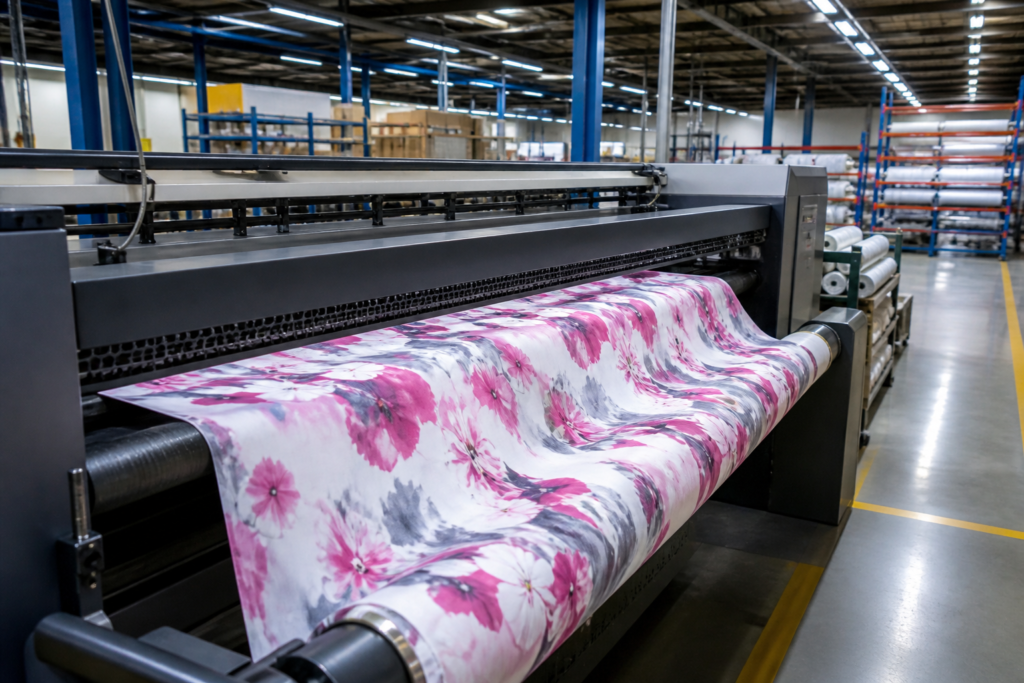
The landscape of South African textile manufacturing is witnessing a significant shift toward digital integration and localized production. As global supply chain volatility continues to challenge traditional import models, Gauteng’s industrial hubs are pivoting toward high-tech, high-volume solutions. Leading this transition in the regional capital, Pink Crystal Clothing has announced a substantial expansion of its bulk manufacturing capacity, specifically optimized for advanced sublimation printing processes.
This expansion arrives at a critical juncture for the South African Retail-Clothing, Textile, Footwear, and Leather (R-CTFL) Master Plan, which aims to boost local procurement and industrial employment. By scaling their operations in Johannesburg, Pink Crystal Clothing is addressing a growing market gap: the need for rapid-turnaround, high-definition apparel that meets international quality standards without the logistical delays associated with East Asian imports.
The Technical Shift: Why Sublimation is Redefining Local Manufacturing
Sublimation printing has moved from a niche decorative service to a cornerstone of modern apparel production. Unlike traditional screen printing, which deposits ink on top of the fabric, sublimation utilizes heat to turn dye into gas, allowing it to permeate the fibers of polyester-based materials. This results in a finish that is resistant to fading, cracking, or peeling—essential factors for the demanding South African climate and rigorous commercial use.
Industry analysts note that the demand for sublimation printing in Johannesburg has surged across various sectors, including corporate branding, sportswear, and fast-fashion retail. The ability to print complex, full-color gradients across entire garment panels before they are sewn together—a process known as “cut and sew”—is a specialized capability that Pink Crystal Clothing has now scaled to accommodate bulk industrial orders.
“The investment in high-capacity sublimation machinery is not just about speed; it is about precision at scale,” says a senior production strategist at the firm. “When dealing with bulk manufacturing, the margin for error is non-existent. Our upgraded facility ensures that the first unit off the line is identical to the ten-thousandth, regardless of the complexity of the digital artwork.”
Economic Implications for the Gauteng Industrial Corridor
The expansion of Pink Crystal Clothing represents more than just a corporate milestone; it serves as a case study for the revitalization of Johannesburg’s manufacturing identity. Historically, the city’s textile industry struggled against low-cost imports. However, the integration of digital technology allows local manufacturers to offer “just-in-time” delivery, a service that overseas competitors cannot match.
By increasing bulk capacity, the company is enabling local enterprises—ranging from sports franchises to large-scale retail chains—to move their production back to South African soil. This shift supports the local economy by creating skilled technical roles in digital design, machine operation, and garment assembly, reinforcing the city’s status as a manufacturing powerhouse.
Solving the “Bulk Barrier” in Custom Apparel
One of the primary challenges in the local market has been the “bulk barrier”—the point at which a local manufacturer can no longer keep up with the volume requirements of a national distributor. Pink Crystal Clothing’s investment specifically targets this bottleneck. Their facility is now engineered to handle high-volume throughput, ensuring that local bulk garment manufacturing remains competitive in terms of both pricing and lead times.
Furthermore, the sublimation process used in their Johannesburg facility is notably more environmentally friendly than traditional dyeing methods. Because it requires significantly less water and produces minimal chemical runoff, the expansion aligns with global shifts toward sustainable textile production—a factor increasingly prioritized by South African corporate social responsibility (CSR) initiatives.
Future Outlook: Digital Manufacturing and National Demand
As the festive season and major sporting events approach, the pressure on the textile supply chain is expected to intensify. The increased capacity at Pink Crystal Clothing provides a buffer for local brands that require reliable, high-volume production cycles. The move highlights a broader trend: the “Fourth Industrial Revolution” (4IR) is no longer a theoretical concept for South African textiles; it is a practical reality being printed onto fabric every day.
With the ability to produce everything from performance jerseys to promotional merchandise at a fraction of the traditional lead time, the Johannesburg facility is setting a new benchmark for what is possible in the regional market. For the industry at large, the message is clear: the future of South African clothing manufacturing lies in the intersection of high-tech digital processes and robust, large-scale local production.

