
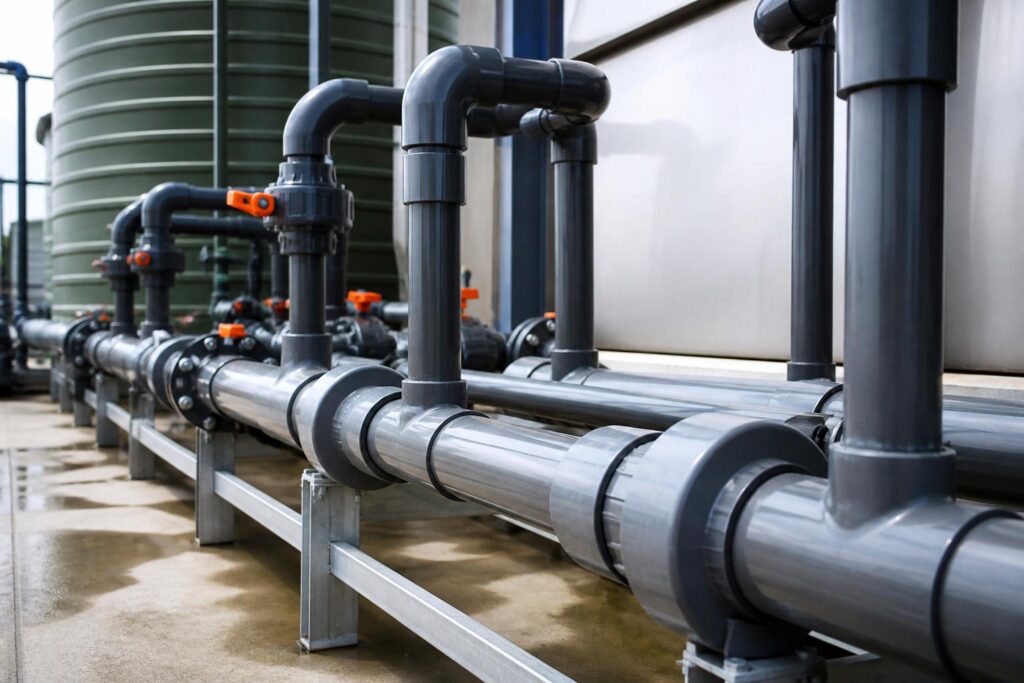
Johannesburg, South Africa — Standards governing PVC plastic welding are under increasing scrutiny in South Africa as industrial operators, engineers and fabricators respond to stricter expectations around containment integrity, compliance and long-term asset performance. The shift is being driven by growing demand across mining, water treatment, agriculture, chemical handling and manufacturing, where even minor weaknesses in pipework or tank systems can result in downtime, product loss or environmental risk.
According to Plastek, a South African specialist in plastic fabrication and containment solutions, the market is moving away from informal fabrication practices toward more defined welding procedures, documented quality control and application-specific material selection. The company says this evolution is especially visible in fluid handling systems, where PVC welding is increasingly evaluated not just on installation speed, but on durability, repeatability and compliance with operating conditions.
Why PVC welding standards are changing
PVC remains widely used in South Africa because it offers chemical resistance, affordability and versatility in applications ranging from pipework to bunding, tanks and process equipment. But as end users place more pressure on system reliability, the requirements around welding and fabrication have become more demanding.
In industrial settings, welded PVC components must withstand pressure fluctuations, chemical exposure, temperature variation and mechanical stress. A poor weld can lead to leaks, service failures and costly unplanned shutdowns. That has prompted greater attention to joint preparation, heat control, surface cleanliness and operator competency.
Plastek says clients increasingly want assurance that PVC welding work is aligned with recognised engineering practices rather than treated as a basic workshop task. In practical terms, that means more emphasis on documented procedures, inspection checkpoints and fit-for-purpose design.
Industrial fluid handling raises the bar
The need for more consistent welding standards is particularly evident in sectors where fluid containment has direct operational and environmental consequences. Mining and mineral processing sites depend on chemical transfer systems that must perform under harsh conditions. Water and wastewater plants require leak-resistant systems to maintain treatment integrity. Agricultural and food-related operations need hygienic, dependable containment equipment that can be maintained efficiently.
For these sectors, the quality of a PVC weld can influence not only performance, but also regulatory exposure and maintenance cost. As a result, procurement teams are increasingly looking for suppliers that can demonstrate engineering discipline, traceability and practical field experience.
According to Plastek, this trend is also linked to a broader shift in South African industry toward lifecycle costing. Rather than choosing the lowest upfront option, operators are weighing fabrication quality against the cost of future repairs, production losses and environmental incidents.
What better practice looks like in PVC plastic welding
Although methods vary by application, several core principles are becoming standard across reputable PVC fabrication work in South Africa:
- Material compatibility: Selecting the right PVC grade for the operating environment, including chemical exposure and temperature constraints.
- Prepared surfaces: Ensuring edges are cleaned, aligned and prepared to promote a consistent bond.
- Controlled welding conditions: Managing heat input and weld timing to reduce distortion and weak joints.
- Qualified workmanship: Using experienced fabricators familiar with industrial fluid handling requirements.
- Inspection and testing: Verifying weld quality before systems are placed into service.
Industry observers say these practices are becoming less optional as asset owners seek more accountability from suppliers. In effect, the standard for PVC welding is moving from “will it hold?” to “can it be verified, repeated and maintained over time?”
Compliance and documentation matter more than ever
In a market where infrastructure performance is under pressure, documentation is taking on greater importance. Fabrication records, material specifications and quality assurance processes are now part of the procurement conversation, especially for large industrial clients and engineering contractors.
Plastek notes that this is a significant change for the sector. In the past, plastic fabrication often relied heavily on experience and visual inspection. Today, clients increasingly expect traceability and evidence that systems have been manufactured with consistency in mind.
This is particularly relevant in South Africa, where businesses are balancing capital constraints with the need to protect assets, manage water responsibly and avoid disruption. Better standards in PVC welding can help reduce waste, extend service life and support safer operations.
Local supply chains and specialist fabrication capacity
South Africa’s industrial economy depends on suppliers that can deliver fabricated plastic solutions locally and at scale. Import delays, transport costs and site-specific requirements often make local fabrication a practical necessity. That has placed a premium on workshops and suppliers that can combine technical skill with responsive service.
Plastek positions itself within that environment as a specialist working across custom plastic fabrication, fluid handling systems and containment applications. The company says its focus is not only on manufacturing components, but on helping clients choose materials and fabrication methods suited to operational demands.
For more information on Plastek’s PVC fabrication and plastic welding capabilities in South Africa, industrial users can review the company’s service offering and application areas.
Outlook: higher expectations will shape the market
As South African industry continues to prioritise reliability, the standard for PVC plastic welding is likely to become more formalised across the market. That will affect not only fabricators, but also engineers, buyers and project managers responsible for specifying containment and fluid handling systems.
The likely result is a more disciplined market, with greater recognition for suppliers that can demonstrate technical consistency and sector-specific expertise. In that context, PVC welding is no longer a back-end workshop activity; it is part of the engineering chain that helps determine whether critical systems perform as intended.
Plastek says the direction of travel is clear: industrial clients are demanding better-designed plastic systems, and welding standards will need to keep pace. For South Africa’s water, mining, agricultural and processing sectors, that evolution may prove essential to improving reliability and reducing operational risk.

