
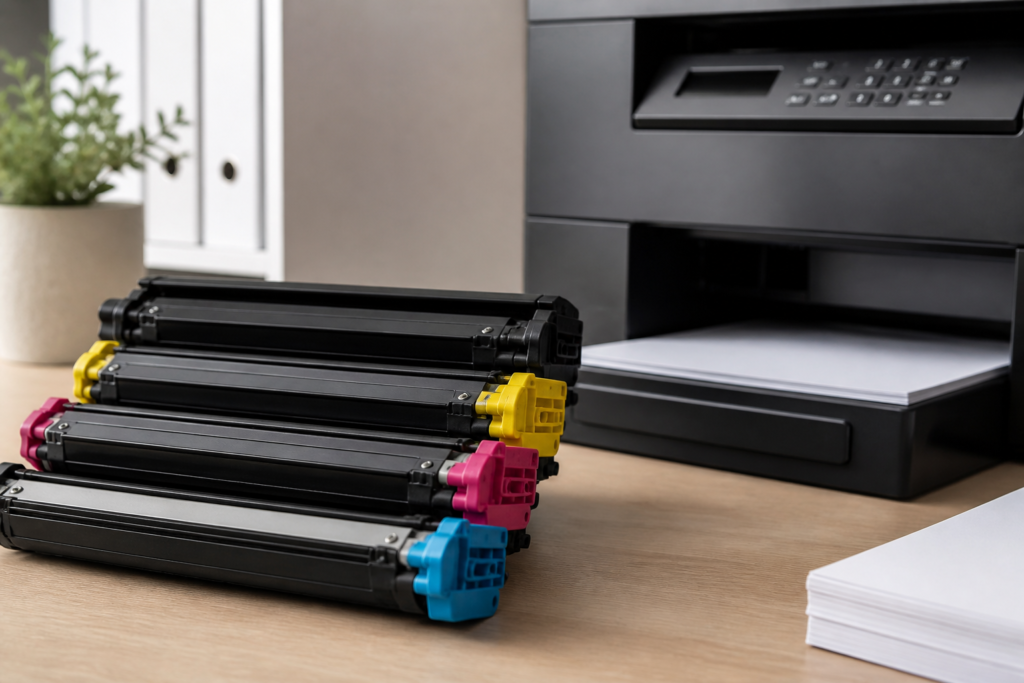
For South African businesses navigating a volatile economic landscape characterized by fluctuating exchange rates and rising operational overheads, the “hidden” cost of document management has become a critical focal point. Industry data suggests that printing expenses can account for up to 3% of a company’s total annual revenue, yet these costs are often poorly managed. The solution to minimizing these expenditures lies not merely in printing less, but in a sophisticated approach to selecting printing cartridges and managing the lifecycle of consumables.
As the Rand continues to experience volatility against major currencies, the price of imported hardware and consumables remains a moving target. Procurement officers are increasingly moving away from the “lowest shelf price” mentality, opting instead for a “Cost Per Page” (CPP) model. According to industry experts at Anza Technology, understanding the interplay between hardware efficiency and consumable yield is the only sustainable way to protect the bottom line in the current fiscal environment.
Understanding the ‘Yield’ Equation
The most common pitfall for South African consumers is the failure to distinguish between the purchase price of a cartridge and its actual value. Printing cartridges are rated by “page yield”—the approximate number of pages a cartridge can print before running out, usually based on 5% page coverage. High-yield (XL) cartridges often carry a higher upfront price tag but significantly lower the CPP, often by as much as 30% to 50% compared to standard capacity units.
In a commercial setting where thousands of documents are processed monthly, the frequency of replacement becomes a hidden labor cost. By sourcing a diverse range of printer consumables that prioritize high-yield outputs, businesses can reduce the administrative burden of frequent ordering and the downtime associated with depleted supplies.
The Great Debate: OEM vs. Compatible Cartridges
The South African market is flooded with a variety of options, broadly categorized into Original Equipment Manufacturer (OEM) products and third-party compatibles. For years, the narrative suggested that only OEM products could guarantee printer longevity and print quality. However, the maturation of the global manufacturing sector has introduced high-quality compatible alternatives that offer comparable performance at a fraction of the cost.
When to Choose OEM
- Marketing and Design: For high-stakes client presentations or color-critical marketing collateral, the precision of OEM chemical toners remains the gold standard.
- Warranty Compliance: Some high-end enterprise printers require OEM usage to maintain specific service-level agreements (SLAs).
When to Choose High-Quality Compatibles
- Internal Documentation: For invoices, reports, and internal memos, high-quality compatibles provide a massive cost-saving opportunity without a perceptible drop in quality.
- High-Volume Environments: In logistics or educational settings where volume outweighs the need for archival-grade ink, compatibles are the logical fiscal choice.
However, the caveat remains quality. “The market is unfortunately rife with ‘drill-and-fill’ operations that can damage sensitive print heads,” warns the technical team at Anza Technology. They emphasize that South African businesses should look for suppliers that provide guarantees on their specialized ink and toner solutions, ensuring that the cost-saving does not lead to a hardware failure.
Technological Integration and Monitoring
Beyond the cartridge itself, how a business manages its fleet is changing. Managed Print Services (MPS) and smart software integration now allow IT managers to monitor ink levels in real-time. This prevents the “panic buying” of cartridges at retail prices when a printer runs dry mid-project. By automating the supply chain, businesses can leverage bulk-buying power and ensure that they are never caught off guard by the sudden need for replacements.
Furthermore, the choice of the printer itself dictates the long-term cartridge cost. Many entry-level printers are sold at a loss or near-cost, with the manufacturer intending to recoup the profit through high-priced, low-yield cartridges. Professional procurement involves analyzing the cartridge prices before the hardware is purchased—a reversal of the traditional buying process that is gaining traction among savvy South African SMEs.
Environmental and Economic Sustainability
In South Africa, the environmental impact of printing is increasingly tied to corporate social responsibility (CSR) mandates. Empty cartridges represent a significant waste stream. Selecting suppliers that offer recycling programs or provide remanufactured cartridges—which use a recycled shell with entirely new internal components—not only reduces the carbon footprint but also aligns with the circular economy principles that are becoming a requirement for many government tenders and corporate contracts.
Ultimately, minimizing print costs in South Africa requires a move toward data-driven procurement. By focusing on page yields, choosing the right balance between OEM and compatible options, and partnering with reputable suppliers who understand the local market constraints, businesses can transform their printing department from a drain on resources into a streamlined, efficient component of their operations.

