
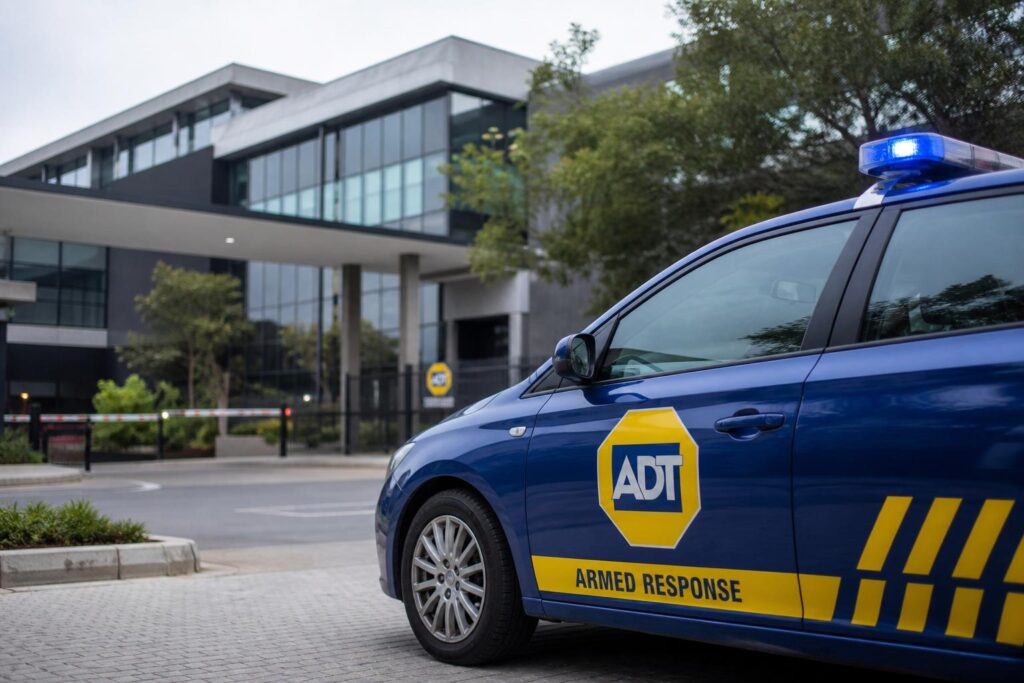
Pretoria’s commercial and residential security market is under renewed pressure as property owners respond to persistent concerns around break-ins, opportunistic crime and service expectations that now extend well beyond basic alarm installation. In this environment, ADT armed response services in Pretoria are being reassessed by businesses and households alike as part of a broader shift toward faster incident verification, tighter monitoring and more integrated protection models.
According to SMP Security, the change is being driven not only by crime patterns, but also by a more informed customer base that expects a quicker and more accountable response chain. The company says the modern armed response model is increasingly defined by coordination, verification and situational awareness rather than visible reaction alone.
For many property owners in Pretoria, that shift has become central to decision-making. Commercial tenants want response systems that can support business continuity. Homeowners want a service that can reduce false alarms, improve escalation protocols and provide reassurance without unnecessary delays. The result is a market moving toward more structured and technology-enabled security service delivery.
Security expectations are changing in Pretoria
Pretoria’s security landscape reflects broader South African trends: pressure on municipal resources, growing demand for private protection, and an increased reliance on rapid private-sector intervention. In suburbs with high-density residential estates, retail corridors and office parks, armed response is no longer viewed as a standalone service. It is expected to integrate with monitoring platforms, access control and reporting systems that help security teams make faster decisions.
SMP Security notes that this is particularly relevant in mixed-use areas where a single response model must serve both residential and commercial environments. In those settings, security providers are expected to understand varying risk profiles, from after-hours burglary threats at business premises to opportunistic intrusion attempts in residential zones.
For an overview of how response services are being positioned within broader protection plans, SMP Security’s armed response services in Pretoria illustrate how the sector is increasingly focused on speed, verification and coordinated incident handling.
From reactive patrols to structured incident management
Historically, armed response was often understood in simple terms: an alarm activates, and a patrol vehicle arrives. While rapid attendance remains important, Pretoria’s current security conditions require more than that. Providers are now expected to support a more structured chain of response that begins with alarm verification and continues through dispatch, on-site assessment and post-incident reporting.
This is especially important in commercial settings where false alarms can disrupt operations, create unnecessary cost and reduce confidence in the system. At the same time, delays in genuine incidents can expose property to loss or damage. SMP Security says the challenge for providers is to balance speed with accuracy, ensuring resources are deployed where they are genuinely needed.
That balance has become a differentiator in a competitive market. Security buyers increasingly want evidence that response processes are monitored, documented and continuously improved. In practical terms, that means clearer communication protocols, better integration between control rooms and response teams, and systems that help identify risk before it escalates.
What commercial clients are prioritising
- Faster verification of alarm activations
- Improved communication with control room staff
- More reliable after-hours incident escalation
- Reduced false alarm call-outs
- Clearer reporting for insurance and compliance purposes
Residential clients want reassurance, not just reaction
In Pretoria’s residential market, the shift is equally pronounced. Homeowners are increasingly looking for armed response services that fit into a broader home security strategy rather than acting as a last-line reaction only. This includes alignment with perimeter systems, CCTV, mobile alerts and monitored alarm platforms.
The emphasis on reassurance has also grown. Families want to know that if an alarm is triggered, the response process is predictable and professional. For many, that means dealing with a provider that can explain how the response team is deployed, what happens on arrival and how incidents are communicated after the event.
SMP Security says this expectation has changed the service conversation. Security is now judged not only by presence on the ground, but by the quality of the process behind that presence. That includes training, dispatch efficiency and the ability to respond appropriately in different environments, from standalone homes to estate-controlled properties.
For households comparing providers, it is important to understand how services are structured and what support is included as part of ongoing protection planning. More information on this approach can be found through the company’s security service information for Pretoria property owners.
Why local expertise matters in a city like Pretoria
Pretoria is not a uniform security environment. Risk profiles vary significantly across the city’s suburbs, business districts and industrial areas. That means a response model that works well in one part of the city may not be sufficient in another. Local knowledge therefore plays a critical role in route planning, response timing and incident management.
According to SMP Security, understanding the geography of a response area can materially affect service outcomes. Traffic patterns, access restrictions, estate protocols and local crime trends all influence how quickly and effectively a team can respond to an activation.
For businesses, that local capability is particularly relevant where a delay could mean lost stock, reputational damage or operational interruption. For residents, it can be the difference between a contained incident and a more serious security breach.
The company also points out that the South African security sector is increasingly shaped by customer scrutiny. Buyers want more transparency around service levels, escalation processes and accountability. This is prompting providers to strengthen their operating standards and communicate them more clearly to clients.
The future of armed response is integrated, not isolated
As Pretoria’s security needs continue to evolve, armed response is becoming one part of a wider ecosystem that includes monitoring, verification, physical patrols and client communication. The most effective providers are those that can connect these elements into a coherent service model.
SMP Security says the next phase of growth in the sector will likely be defined by responsiveness, professionalism and the ability to tailor solutions to both residential and commercial environments. In that context, armed response remains important, but its value increasingly depends on how well it fits into a broader security architecture.
For Pretoria property owners, the message is clear: security decisions are becoming more strategic. Whether protecting a family home or a business operation, the priority is no longer simply the presence of a response team, but the reliability of the entire chain that supports it.

